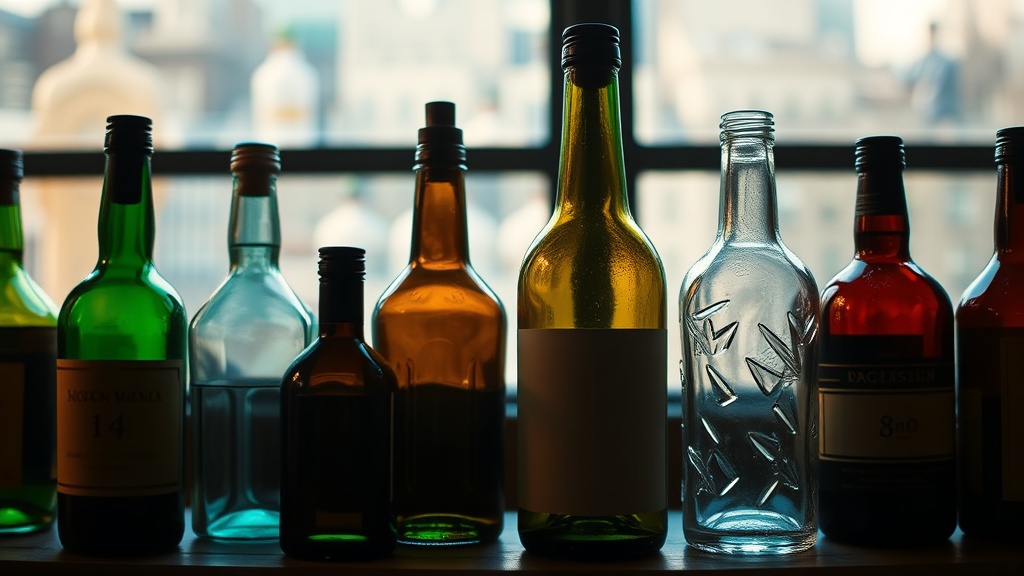
How to Spot Fake Vintage Bottles Before You Buy

What You'll Learn About Authenticating Vintage Bottles
This guide teaches you how to identify counterfeit vintage bottles before money changes hands. Whether you're hunting at flea markets, browsing online auctions, or visiting estate sales, the ability to distinguish authentic pieces from clever reproductions will save you from costly mistakes—and protect the integrity of your collection. We'll cover the telltale signs of fakes, the tools you'll need for verification, and the specific areas where forgers most often slip up. By the end, you'll have a practical framework for evaluating any vintage bottle that crosses your path.
Why Do Collectors Fall for Fake Vintage Bottles?
The vintage bottle market has exploded in popularity over the past decade. As prices for rare specimens climb, so does the incentive for unscrupulous sellers to pass off reproductions as genuine articles. The problem isn't limited to high-end pieces either—even mid-century soda bottles and common apothecary jars now face a flood of convincing fakes.
Most collectors get burned because they rely on superficial cues. A bottle looks old, feels heavy, and has the right patina—so it must be authentic, right? Not quite. Modern forgers have access to techniques that replicate age remarkably well. They can chemically accelerate glass weathering, create convincing wear patterns, and even reproduce vintage labeling with alarming accuracy. The key isn't trusting your eyes alone—it's knowing exactly where to look and what questions to ask.
How Can You Tell Real Glass Age from Artificial Aging?
Authentic vintage glass develops character over decades through natural environmental exposure. This process creates specific markers that are difficult—though not impossible—to fake convincingly.
Surface Iridescence: Genuine old glass often displays a rainbow-like sheen caused by minerals in the soil reacting with the glass surface over time. Real iridescence has depth and variation—colors shift as you rotate the bottle under light. Artificial iridescence, created through chemical baths or sandblasting, looks flat and uniform. Hold the bottle up to a strong light source; natural iridescence will have subtle imperfections and uneven distribution.
Base Wear Patterns: Bottles sitting in one place for fifty-plus years develop specific base characteristics. Look for wear rings—slightly polished areas where the bottle rested against surfaces. Authentic wear happens gradually; it won't be perfectly symmetrical or excessively smooth. Forgers sometimes grind bases to simulate age, but this creates telltale parallel scratches or an unnaturally glossy finish.
Seed Bubbles and Inclusions: Pre-1920s glass manufacturing techniques often trapped tiny air bubbles and impurities within the glass matrix. These aren't flaws—they're signatures of authenticity. Modern reproductions typically use clearer glass with fewer inclusions. Use a bright flashlight and magnifying glass to examine the glass thickness; scattered micro-bubbles suggest genuine vintage manufacture.
What Manufacturing Details Reveal a Bottle's True Age?
The way a bottle was made leaves permanent physical evidence. Understanding these manufacturing markers helps you date a piece accurately—and spot anachronisms that scream "reproduction."
Mold Seams: Hand-blown bottles (pre-1900s) show no mold seams or have seams that stop below the lip. Semi-automatic machine production (1890s–1920s) created seams running to the top of the finish but not over it. Fully automatic machines (post-1903) produced seams running completely over the lip. If a seller claims a bottle is 1880s but shows a seam running over the lip, you're looking at a fake—or a seriously misdated piece.
Pontil Marks: These rough, circular scars on the base indicate hand-blown manufacture. The pontil rod held the bottle while the glassblower shaped it, then broke away leaving a distinctive mark. A smooth, polished base on an allegedly hand-blown bottle is a major red flag. However, note that some legitimate later bottles were snap-case molded (no pontil mark), so context matters.
Embossing Quality: Vintage embossing has a distinctive character—slightly irregular, with subtle variations in depth and sharpness. Modern reproductions often feature laser-sharp, perfectly uniform embossing that looks almost too clean. Run your fingers across raised lettering; authentic embossing rarely feels perfectly consistent.
Where Should You Check for Modern Materials and Techniques?
Forgers sometimes combine old glass with new components—or use contemporary materials that didn't exist during the claimed production period. These anachronisms are often the smoking gun.
Closures and Caps: Check that closure types match the bottle's claimed era. Screw caps weren't common until the 1920s–1930s. Plastic liners in caps didn't appear until the 1950s. If someone tries selling you an "1890s medicine bottle" with a plastic-lined cap, walk away.
Labels and Adhesives: Paper labels are tricky—modern reproductions often use artificially aged paper that looks convincing at first glance. Check the adhesive: modern glues yellow differently than historic adhesives. Also, examine printing quality; modern digital printing creates dots under magnification, while vintage letterpress or lithography shows solid ink coverage.
Applied Color Labels (ACL): These painted-on labels (common on 1930s–1960s soda bottles) are frequently reproduced. Authentic ACL has a specific texture—you can feel slight ridges where paint meets glass. Reproductions often sit too flat or flake off in large sheets rather than the gradual, irregular wear seen on genuine pieces.
How Do You Verify Provenance and Documentation?
A bottle's history matters as much as its physical characteristics. Smart collectors build a paper trail—and know when documentation itself might be fabricated.
Request provenance documentation for expensive pieces. This might include auction records, estate sale receipts, or previous owner histories. Be skeptical of vague claims like "found in an old barn" or "from a collector's estate" without specifics. Cross-reference any documentation with known historical records.
For particularly valuable bottles, consider consulting The Society for Historical Archaeology, which maintains extensive resources on bottle dating and authentication. Professional appraisers who specialize in glassware can provide written opinions—worth the fee for high-value acquisitions.
Online databases like sha.org/bottle offer detailed typologies and dating guides. Familiarize yourself with these resources before making significant purchases. The more reference material you've internalized, the faster you'll spot discrepancies in person.
What Tools Should You Carry for Field Authentication?
Serious collectors keep a portable authentication kit. You don't need expensive equipment—just a few items that reveal what naked eyes miss.
- Jeweler's Loupe (10x–30x): Examine glass texture, embossing quality, and label printing details
- UV Flashlight: Modern glass often fluoresces differently than vintage glass under blacklight
- Magnetic Flashlight: Hands-free examination of base marks and interior features
- Measuring Tape: Verify dimensions against documented specifications for claimed models
- Reference Photos: Keep digital images of authentic examples on your phone for side-by-side comparison
When Should You Walk Away from a Purchase?
Sometimes intuition matters as much as technical knowledge. If a deal feels rushed, if the seller deflects specific questions, or if the price seems too good for the rarity claimed—pause. High-pressure tactics ("another buyer is coming in an hour") often mask problems with the merchandise.
Remember: the bottle market isn't going anywhere. Walking away from a questionable piece preserves both your wallet and your collection's integrity. The best collectors aren't those who acquire the fastest—they're the ones who acquire wisely, building collections that stand up to scrutiny decades later.
For ongoing education, join collector communities like the Federation of Historical Bottle Collectors. Their forums and publications keep you updated on new forgery techniques and authentication methods. The learning never stops—and that's part of what makes this hobby genuinely rewarding.