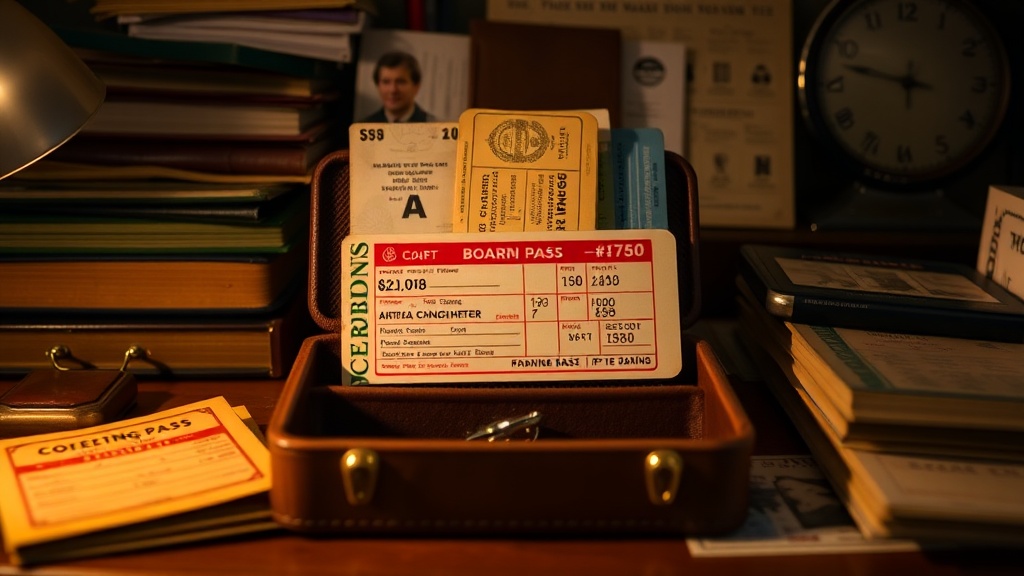
Organizing Your Vintage Boarding Pass Collection

Most collectors believe that a high-quality scanner or a fancy digital catalog is the first step to a professional collection, but that’s a mistake. A collection isn't just a pile of paper; it's a physical archive that requires a structural system before you ever touch a computer. This post breaks down the physical-first approach to organizing vintage boarding passes, focusing on categorization, storage materials, and preservation techniques to ensure your pieces don't degrade over time.
How Should You Categorize Vintage Boarding Passes?
The best way to categorize your collection is by a combination of airline, era, and route. You shouldn't just throw everything into one box because a 1960s Pan Am ticket requires different handling than a modern low-cost carrier slip. If you group by airline first, you can easily track the evolution of specific brands like Lufthansa or British Airways.
Think about how you want to view your collection. Do you want to see a chronological history of aviation, or do you want to see a geographic spread of your travels? (I personally prefer the chronological method—it feels like a timeline of human progress.)
Here are three common ways to structure your sorting process:
- By Airline Brand: Grouping by carrier (e.g., TWA, Qantas, or Delta) allows you to see how a single company's aesthetic changed over decades.
- By Route/Destination: This is great for travelers who want to see the "path" of their collection, moving from domestic hops to international long-haul.
- By Material Type: Separating heavy cardstock passes from thin, thermal paper slips is vital for long-term storage.
Don't mix them up. If you mix a fragile, thin thermal receipt with a heavy, stiff cardstock pass, the weight of the cardstock can actually crush or crease the lighter paper over time.
What Are the Best Storage Materials for Paper Ephemera?
You must use acid-free, archival-grade sleeves and folders to prevent yellowing and structural decay. Standard plastic sleeves from office supply stores often contain PVC, which releases gases that can destroy the ink on your passes. If you don't use the right materials, you're essentially watching your collection die in slow motion.
When looking for supplies, look for the term "archival quality." This isn't just a marketing buzz or a fancy word—it's a technical standard. For example, acid-free paper and plastics are designed to remain chemically neutral, meaning they won't leach chemicals into your vintage items.
I’ve found that different types of paper require different housing. A thick, heavy boarding pass from the 1970s can sit in a rigid, Mylar-lined folder, but a thin, modern thermal printout needs something much more delicate. If you're unsure about the environment, check out my guide on avoiding humidity damage in your collection.
| Item Type | Recommended Housing | Avoid This |
|---|---|---|
| Heavy Cardstock Passes | Rigid Archival Binders | Loose Folders |
| Thermal Paper Slips | Acid-Free Sleeves | Direct Sunlight |
| Old Airline Tickets | Mylar Sleeves | Standard Plastic Sleeves |
The catch? Finding high-quality Mylar can be a bit more expensive than standard plastic, but the cost of replacing a ruined 1950s ticket is much higher. It's a long-term investment in the life of the piece.
How Do You Prevent Light Damage to Your Collection?
Keep your collection in a dark, temperature-controlled environment to prevent ink fading and paper embrittlement. Light is one of the most aggressive enemies of vintage paper. Even if you have the best sleeves in the world, UV rays will eventually bleach the ink and turn the paper brittle.
I can't stress this enough: never display your most precious pieces under direct sunlight. Even a well-lit room can cause damage over a period of months. If you want to display a piece, use a frame with UV-protective glass.
If you're worried about the light sensitivity of your specific items, you should read more about preserving rare paper from sunlight. It's a deep dive into the science of light-induced degradation.
A few quick tips for display and storage:
- Use LED lighting if you must display items, as it produces much less heat and UV than incandescent bulbs.
- Store your main archives in a way that keeps them in total darkness—think closed boxes or thick albums.
- Avoid storing your collection in attics or basements. Temperature swings are just as bad as light exposure.
The goal is stability. A steady, cool, and dark environment is the gold standard for any serious collector. If the temperature or humidity fluctuates wildly, the fibers in the paper will expand and contract, which leads to warping.
One thing to watch out for is the "thermal paper" issue. Many modern boarding passes use thermal printing, which is essentially a chemical reaction to heat. If you store these in a warm area, the "ink" might actually disappear or turn completely black. It's a frustrating way to lose a piece of history.
When you're building your catalog, keep a digital backup. Photograph your items in high resolution and save them to a cloud service. This way, even if a physical piece is damaged, the visual history remains. It's a way to preserve the "data" of the item even if the physical medium fails.
It's easy to get caught up in the thrill of the hunt, but the real work begins once the item is in your hands. A collection is only as good as its organization. If you can't find a specific pass or if it's stuck to another one because of poor storage, the collection has failed its purpose. Take the time to do it right from the start. You'll thank yourself a decade from now when your most prized pieces are still as vibrant as the day you found them.
Steps
- 1
Group by Airline or Era
- 2
Select Protective Sleeves
- 3
Use Acid-Free Binders
- 4
Create a Digital Catalog