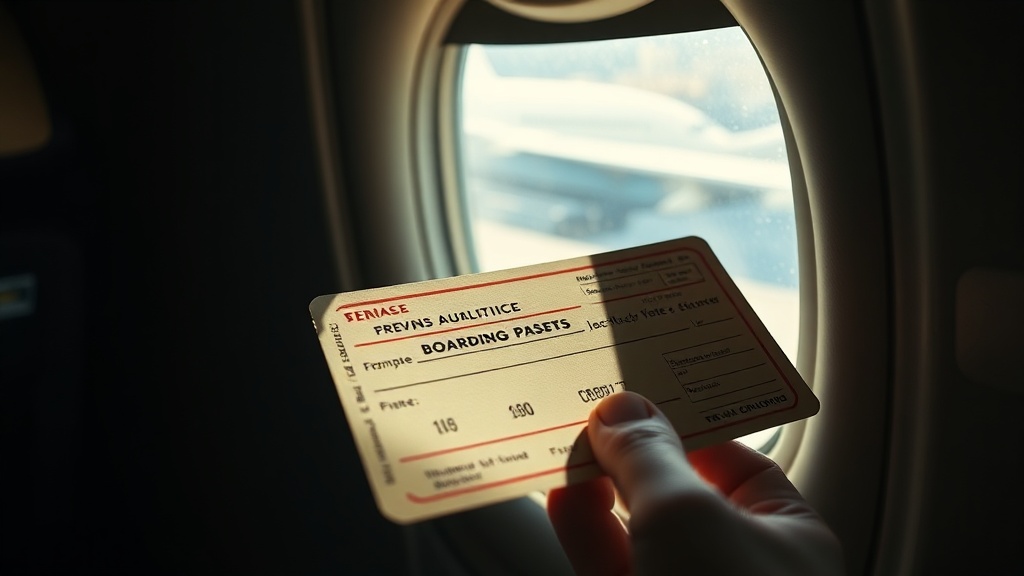
Preserving Rare Paper: Protecting Vintage Boarding Passes from Sunlight

UV radiation can degrade the ink on a standard thermal paper boarding pass in as little as 48 hours if left in direct sunlight.
High-end collectors of paper ephemera often face a silent enemy: photochemical degradation. This post explores how ultraviolet (UV) light destroys the pigments in vintage boarding passes, the specific types of paper that are most at risk, and the best physical storage methods to prevent fading. Protecting your collection isn't just about keeping things tidy; it's about preventing permanent loss of value and historical detail.
When you're dealing with items like vintage Pan Am boarding passes or early 1970s Lufthansa slips, you aren't just holding paper. You're holding a piece of history that is incredibly sensitive to its environment. Light exposure causes a chemical reaction known as photodegradation, which breaks down the molecular bonds in ink and paper fibers. Once that happens, there's no going back.
How Does UV Light Damage Paper Collectibles?
UV light causes both discoloration and structural weakness in paper through a process called photo-oxidation. This occurs when high-energy photons strike the cellulose fibers and the chemical dyes used in printing. Most modern boarding passes are printed on thermal paper, which is notoriously unstable. If you leave a thermal pass on a sunny windowsill, the "image" might actually disappear or turn completely black due to heat and light sensitivity.
There are two main types of damage to watch for:
- Ink Fading: The pigments in the text lose their intensity, making the flight details illegible.
- Paper Yellowing: The lignin in older, cheaper paper stocks reacts with light and oxygen to turn the paper brittle and yellow.
It's a frustrating reality for collectors. You find a perfect specimen of a 1960s TWA pass, only to realize the ink is already ghosting. (I've seen several pieces in my own collection where the edges turned a pale beige just from being displayed too close to a window.)
For more on the science of paper aging, you can look at the scientific principles of photodegradation on Wikipedia. It's a slow, invisible process that happens every time you expose your items to a bright room.
What Is the Best Way to Store Vintage Boarding Passes?
The best way to store vintage boarding passes is in acid-free, archival-grade sleeves kept in a dark, temperature-controlled environment. You want to avoid any contact with standard plastic sleeves that contain PVC, as these can off-gas and actually melt the ink onto the plastic. This is a common mistake for new collectors who grab cheap photo albums from a big-box store.
If you want to display your collection, you have to be intentional about it. A standard picture frame with glass is not enough protection. Most household glass provides zero protection against UV rays. You'll need to seek out specialized museum-grade UV protection if you plan on framing anything.
Here is a breakdown of common storage materials and their suitability for paper ephemera:
| Material Type | Suitability | Notes |
|---|---|---|
| Standard Plastic Sleeves (PVC) | Poor | Can leach chemicals and stick to the paper. |
| Mylar (Biaxially Oriented PET) | Excellent | The gold standard for archival storage. |
| Acid-Free Cardstock | Good | Great for backing passes inside a sleeve. |
| Glass Frames (Standard) | Risky | Offers no UV protection; can trap moisture. |
I always recommend using Mylar sleeves. They are chemically inert and won't react with the ink. If you're serious about your collection, don't skimp on the quality of your housing. It's much cheaper to buy a good sleeve now than to try and replace a faded 1980s British Airways pass later.
The Importance of Temperature and Humidity
Light isn't the only factor. If your storage area is too humid, the paper will absorb moisture and become wavy or even develop mold. If it's too dry, the fibers become brittle and snap easily. A stable environment is the goal. Most collectors find that a standard indoor room-temperature setting is fine, provided it isn't in a basement or an attic where extremes occur.
Can I Display My Collection Safely?
Yes, you can display your collection safely if you use UV-filtering acrylic instead of standard glass. If you want to show off a rare piece, look for "museum-grade" or "UV-resistant" acrylic. This will block up to 99% of harmful rays. It's a bit more expensive, but it's the only way to ensure your display piece doesn't become a faded relic within a few years.
When choosing a display location, follow these rules of thumb:
- Avoid placing displays directly opposite a window.
- Never place items near heat sources like radiators or computer vents.
- Use LED lighting rather than incandescent bulbs, as LEDs emit significantly less UV radiation.
- Rotate your collection. If you have a rotating display, don't leave the same piece out for months on end.
I've learned the hard way that "natural light" is a collector's enemy. Even if the sun isn't hitting the item directly, the ambient UV in a bright room is enough to cause long-term damage. It's a subtle process. You won't notice it day-to-day, but a year later, the difference is stark.
If you're just starting out, you might be interested in the rise of boarding pass collecting and how to build a foundational collection. Understanding the value of these items early on helps you realize why preservation is so important.
The Library of Congress provides extensive documentation on paper preservation. It's a great resource if you want to dive deeper into the technical side of how different types of paper react to environmental stressors. While they focus on large-scale archives, the principles apply perfectly to small-scale collectors.
A lot of people ask if digital scanning is a good way to "save" a pass before it fades. It is. I highly recommend high-resolution scanning for every significant piece in your collection. If the physical item eventually loses its color, you'll at least have a perfect digital record of the details. It's a digital insurance policy.
Don't treat your paper like a scrap of trash. Treat it like the historical document it is. Whether it's a simple domestic flight or a rare international route, that piece of paper deserves a controlled environment. It's the difference between a collection that lasts a lifetime and one that disappears into a yellowed blur.